Other
Voice of Voiceless ll
₹80,000
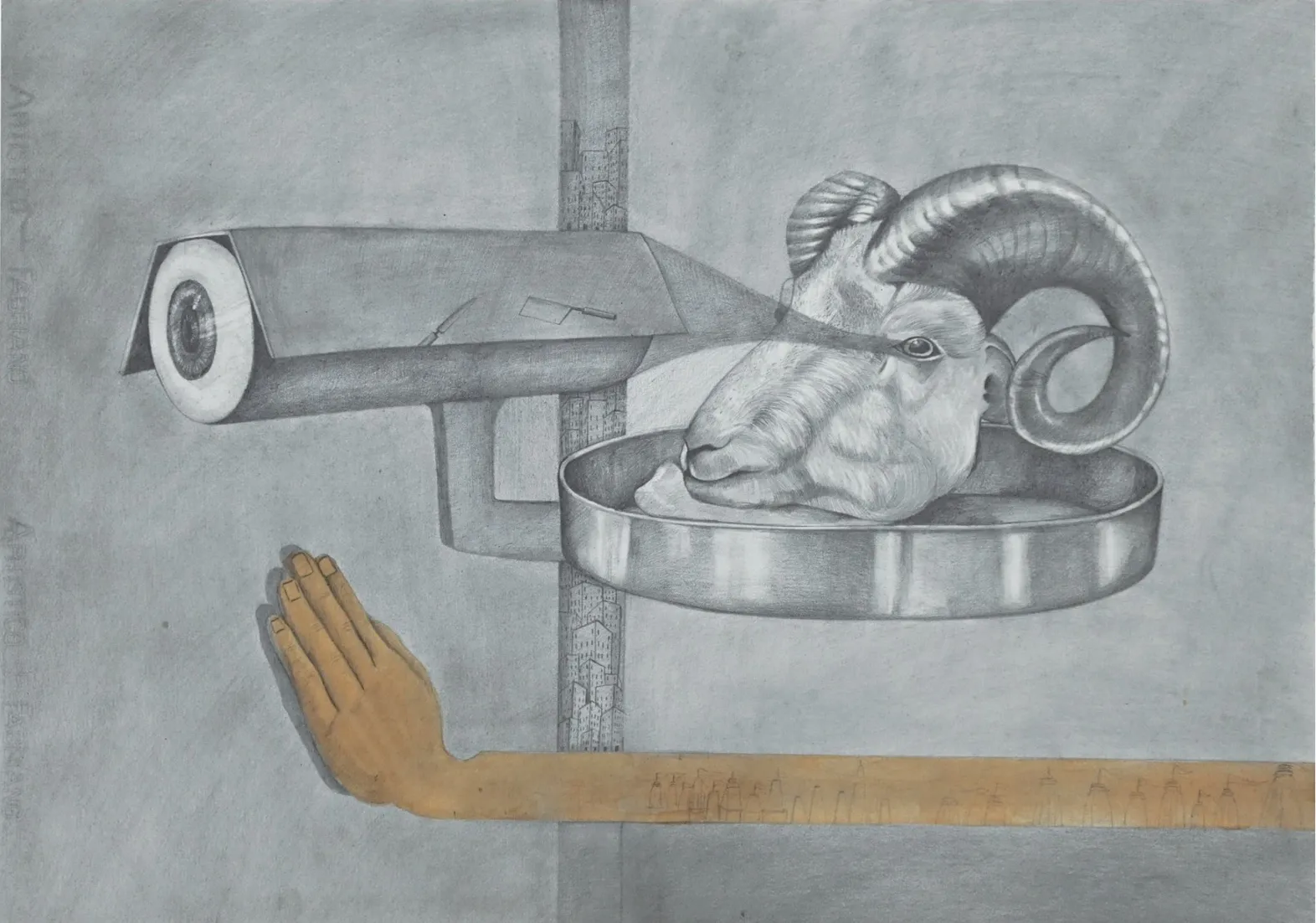
"Voice of the Voiceless" explores the uneasy intersection of surveillance, control, and the objectification of animals through a surreal and haunting composition. A CCTV camera targets a severed goat's head, placed on a metallic tray, evoking themes of sacrifice and voiceless suffering. In contrast, a raised human hand—warmly colored and marked with a faint cityscape—emerges as both a gesture of resistance and complicity. This stark juxtaposition invites viewers to reflect on the mechanisms of power, the normalization of violence, and our collective silence in the face of injustice toward non-human lives. The artwork becomes a mirror to moral erosion.
Interested in this piece?
Chat on WhatsAppOr reach us directly at +91 79824 33408
Home visit available
Select artworks can be viewed at your home before you decide. A visit is ₹1,000 per artwork, fully adjusted against the purchase if you go ahead. See how it works.
Ask about a home visit for this pieceOr leave us a question about this piece
- Category
- Drawing
- Subcategory
- Graphite on paper
- Year
- 2024
- Dimensions
- 22 × 30 in
- Place
- Delhi
- Certificate no.
- MS-Voice of Voiceless ll-2024
Color palette
- Gray (88%)
- White (6%)
- Other (4%)
- Brown (3%)
Exact tones detected
Light GrayGrayLight GrayGrayGray
Description
In "Voice of the Voiceless," the artist presents a powerful surrealist tableau that critiques the dehumanizing (and de-animalizing) mechanisms of modern society. Dominating the composition is a CCTV camera, a symbol of constant surveillance and control, which ominously doubles as a tool of violence. Its lens is aligned with the severed head of a ram—an animal historically associated with sacrifice—positioned inside a shallow metal tray, evoking imagery of ritual slaughter and clinical detachment.
The human hand, painted in a naturalistic tone in stark contrast to the monochrome backdrop, is raised in what appears to be a gesture of objection or helplessness. It stretches across the lower half of the composition, becoming a barrier yet also part of the system—imprinted faintly with an urban skyline, suggesting human complicity in the machinery of control.
This drawing becomes a haunting metaphor for voiceless beings—animals, marginalized groups, and even silenced individuals—caught in the surveillance-industrial complex. The artwork raises unsettling questions: Who watches? Who is sacrificed? And who has the right to speak?
Technique Highlight
- Medium: Graphite and colored pencil on paper
- Style: Realistic rendering combined with surrealist juxtapositions
- Methods: Highly controlled pencil shading creates a cold, metallic effect, especially on the camera and metal tray. Minimal use of color (in the hand and architectural motifs) draws intentional focus.
- Composition: The visual narrative moves horizontally from the gesture of resistance to the gaze of the mechanical eye, reinforcing themes of surveillance and submission.
Historical Context:
This work resonates with post-20th-century critiques of state surveillance, biopolitics, and animal rights. In an era where both human and non-human lives are increasingly commodified, monitored, and controlled, the artwork draws from surrealist traditions of protest, particularly those that question the boundaries between organic and mechanical, real and symbolic.
It also echoes Michel Foucault’s concept of the “Panopticon”—a structure of internalized surveillance—and relates to contemporary concerns around industrial farming, animal cruelty, and urbanization’s moral consequences.
Color Analysis:
- Dominant tones: Cool greys and black, evoking sterility, detachment, and emotional numbness.
- Warm contrast: The hand is rendered in warm tones, symbolizing human presence, life, or perhaps resistance.
- Muted background: Enhances focus on the symbolic figures while creating a suspended, timeless space.
Symbolism:
- CCTV Camera: Surveillance, control, and detachment from empathy.
- Got Head: Sacrifice, silenced suffering, commodification of life.
- Metal Tray: Clinical detachment; evokes themes of slaughter, dissection, or judgment.
- Raised Hand: Resistance or plea for recognition; possibly a symbol of helplessness.
- Urban Skyline on the Arm: Suggests that urban society is both witness and participant in this cycle of oppression.
- Monochrome Palette: Emphasizes moral ambiguity, lifelessness, and the absence of vitality or justice.
Technique
This artwork, created using graphite and water color on paper, blends realistic rendering with surrealist juxtapositions to deliver a powerful visual statement. The artist employs meticulous pencil shading to produce a cold, metallic texture, particularly evident in the surveillance camera and the tray holding the severed goat’s head. The selective use of color—restricted to the human hand and faint architectural outlines—creates a focal contrast that heightens emotional and symbolic impact. The horizontal composition guides the viewer's gaze from the raised hand, a potential symbol of protest or complicity, toward the unblinking mechanical eye, reinforcing themes of surveillance, submission, and silenced suffering.
Historical context
This work resonates with post-20th-century critiques of state surveillance, biopolitics, and animal rights. In an era where both human and non-human lives are increasingly commodified, monitored, and controlled, the artwork draws from surrealist traditions of protest, particularly those that question the boundaries between organic and mechanical, real and symbolic. It also echoes Michel Foucault’s concept of the “Panopticon”—a structure of internalized surveillance—and relates to contemporary concerns around industrial farming, animal cruelty, and urbanization’s moral consequences.
Symbolism
In Voice of the Voiceless, each element is loaded with layered symbolism. The CCTV camera represents surveillance and systemic control, emphasizing society’s emotional detachment and passive complicity. The ram’s severed head, placed unnervingly in a metal tray, signifies sacrifice and the silencing of sentient life, reduced to objects for human use. This clinical presentation mirrors themes of slaughter, judgment, and commodification. The raised human hand could be seen as a gesture of resistance, a cry for empathy, or perhaps a symbol of helplessness. Etched with an urban skyline, the arm implicates modern society as both observer and perpetrator. The monochrome palette reinforces the atmosphere of lifelessness, moral ambiguity, and the stark absence of justice or compassion.
Catalogued May 6, 2025
From the same artist
More by Madhusudhan Sharma


Keep exploring