Other
Cow in City Xlll
₹1,00,000
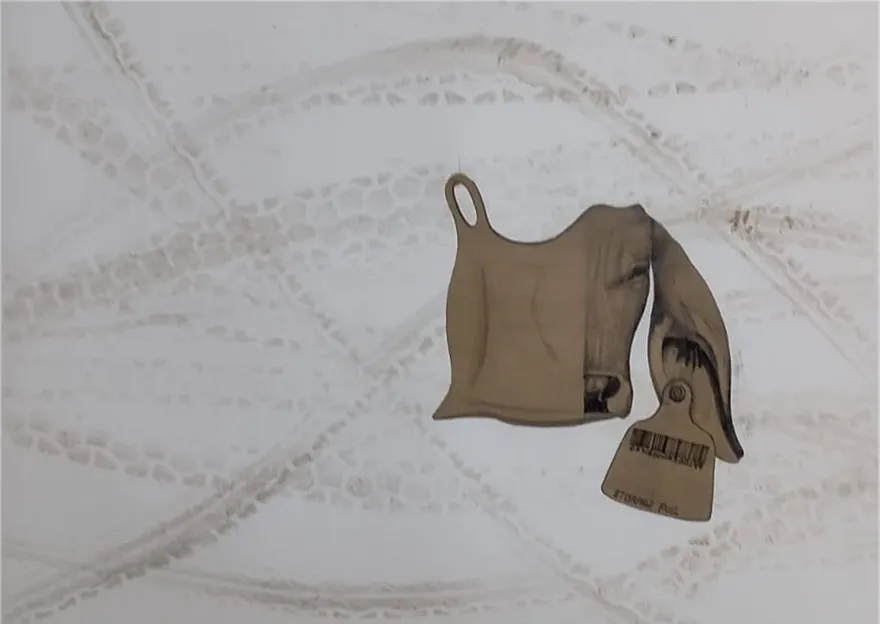
Cow in the City presents a surreal fusion of a cow’s head with a plastic bag and a paint roller, highlighting the environmental burden placed on animals in urban landscapes. Set against a backdrop of tire tracks, the artwork underscores how pollution, plastic waste, and industrialization deform and erase natural identities.
Interested in this piece?
Chat on WhatsAppOr reach us directly at +91 79824 33408
Home visit available
Select artworks can be viewed at your home before you decide. A visit is ₹1,000 per artwork, fully adjusted against the purchase if you go ahead. See how it works.
Ask about a home visit for this pieceOr leave us a question about this piece
- Category
- Drawing
- Subcategory
- Graphite and texture on paper
- Year
- 2023
- Dimensions
- 22 × 30 in
- Place
- Delhi
- Certificate no.
- MS-COW-Xlll-2024
Color palette
- Gray (90%)
- White (6%)
- Other (3%)
- Black (1%)
Exact tones detected
Light GrayLight GrayLight GrayLight GrayLight Gray
Description
In the surrealist drawing titled Cow in the City, the audience is confronted with a gripping fusion of nature and artifice, represented through the grotesque amalgamation of a cow, a plastic bag, and a paint roller. Each element carries profound connotations, intertwining to convey a powerful critique of the urban landscape, particularly the erosion of natural elements by synthetic materials. This startling depiction thrusts viewers into a space where traditional symbols are repurposed, forcing a re-evaluation of our relationship with the environment in an increasingly mechanized world.
However, in this drawing, the cow head emerges grotesquely from the crumpled contours of a plastic bag, a stark representation of commodification and waste. This transformation strips away the essence of the cow as a living being, instead reducing it to a hollow object devoid of vitality. The coupling of the cow's head with the plastic bag not only reflects a loss of identity but also serves as a commentary on how urbanization has dehumanized the natural world, merging it with objects that are intrinsically linked to consumer culture.
The cow’s ear and part of its head seamlessly transition into a paint roller, prominently adorned with the label “STRONG PLUS”. This integration of a tool associated with renovation or alteration can be interpreted as a metaphor for the aggressive imposition of artificiality upon nature. The label itself suggests a forceful erasure, as if nature is being ‘repainted’ over, redacted in favor of the sterile and often soulless aesthetics of concrete jungles. Thus, the cow, once a being of nourishment and companionship, is now subjected to the whims of human design, a victim of modernization that seeks to overwrite the organic.
Surrounding this dystopian figure is a stark white background, interrupted only by tire tread imprints that crisscross the space. These imprints evoke images of relentless traffic and the omnipresent nature of consumerism—tools of urban life that symbolize not just movement but also the violence inherent in modernity. The tread marks underline the harsh reality of urban existence, where the natural world is often sacrificed at the altar of convenience and profit. The contrast between the white space and the dark imprints amplifies the sense of loss and desolation; the cow, a natural entity, appears displaced amid the turmoil of a bustling, mechanized society that fails to recognize its own capacity for destruction.
Ultimately, Cow in the City offers a haunting portrayal of our contemporary dilemma. The hybrid creature not only embodies the collision of nature and industrialization but also challenges viewers to confront the unsettling reality that urbanization has brought. The distortion of the cow—a creature once integral to the cycles of life—serves as a warning of what may become of our environment if we continue to prioritize progress over preservation. This drawing leaves us contemplating the implications of our choices, urging a reconsideration of how we perceive and interact with the natural world, reminding us that in the race for modernity, something vital is being sacrificed. Within this unsettling landscape, the cow stands as a poignant reminder of what we could lose in our journey towards an increasingly artificial existence.
Technique Highlight
The artist employs graphite and soft shading techniques to render highly detailed anatomical features of the cow, contrasting sharply with the simplified, almost logo-like forms of the bag r. The clean background and repetitive tire marks add to the feeling of emptiness and mechanical repetition, echoing the devaluation of life in modern systems.
Historical Context
This piece resonates with a broader lineage of post-industrial and ecological surrealism, where artists critique the alienation caused by technology, consumer waste, and urban sprawl. In India, cows have spiritual and cultural significance, yet are increasingly seen suffering in cities—homeless, injured, and feeding on plastic. This work taps into that duality, making a broader global statement through a distinctly local lens.
Color Analysis
Monochromatic and muted in tone, the artwork predominantly features a sepia-toned brown for the cow and surrounding objects, reinforcing themes of decay and age. The pale, cool background, adorned with brown tire patterns, provides a striking visual contrast that enhances the tension between the natural and the artificial. The cow is depicted in rich, earthy brown hues, firmly grounding it in a sense of reality and tradition. Meanwhile, the background features a muted color scheme that is primarily composed of soft light browns, created from original mud on black tire marks. This choice highlights themes of lifelessness, pollution, and urgency. The limited color palette further amplifies the overall somber mood of the piece.
Symbolism
The plastic bag flutters through the air, a striking representation of suffocation, pollution, and the pervasive throwaway culture that dominates contemporary society. Its lightweight presence belies the heavy impact it has on our environment, choking ecosystems and epitomizing a convenience-driven mindset that disregards sustainability. Similarly, the ear tag serves as a stark symbol of how industrial systems insidiously repaint and overwrite nature’s identity, marking living beings as mere commodities in an unfeeling system. The cow’s face stands in poignant contrast, embodying innocence and tradition, yet revealing the burden of modernity's relentless march, which threatens to disfigure its essence. Lastly, tire tracks crisscross the landscape, a grim testament to urban violence and the relentless motion of civilization that intrudes upon and devastates natural spaces. Together, these elements weave a narrative of conflict between nature and modernity, highlighting the urgent need for a more harmonious coexistence.
- Plastic Bag: Represents suffocation, pollution, and the throwaway culture.
- Ear tagged : Symbolizes how industrial systems repaint and overwrite nature’s identity.
- Cow’s Face: A symbol of innocence, burden, and tradition being disfigured by modernity.
- Tire Tracks: Indicate urban violence, constant motion, and careless intrusion into natural spaces.
Technique
The artist employs graphite and soft shading techniques to render highly detailed anatomical features of the cow, contrasting sharply with the simplified, almost logo-like forms of the bag r. The clean background and repetitive tire marks add to the feeling of emptiness and mechanical repetition, echoing the devaluation of life in modern systems.
Historical context
This piece resonates with a broader lineage of post-industrial and ecological surrealism, where artists critique the alienation caused by technology, consumer waste, and urban sprawl. In India, cows have spiritual and cultural significance, yet are increasingly seen suffering in cities—homeless, injured, and feeding on plastic. This work taps into that duality, making a broader global statement through a distinctly local lens.
Symbolism
The plastic bag flutters through the air, a striking representation of suffocation, pollution, and the pervasive throwaway culture that dominates contemporary society. Its lightweight presence belies the heavy impact it has on our environment, choking ecosystems and epitomizing a convenience-driven mindset that disregards sustainability. Similarly, the ear tag serves as a stark symbol of how industrial systems insidiously repaint and overwrite nature’s identity, marking living beings as mere commodities in an unfeeling system. The cow’s face stands in poignant contrast, embodying innocence and tradition, yet revealing the burden of modernity's relentless march, which threatens to disfigure its essence. Lastly, tire tracks crisscross the landscape, a grim testament to urban violence and the relentless motion of civilization that intrudes upon and devastates natural spaces. Together, these elements weave a narrative of conflict between nature and modernity, highlighting the urgent need for a more harmonious coexistence.
Catalogued May 9, 2025
From the same artist
More by Madhusudhan Sharma


Keep exploring