Other
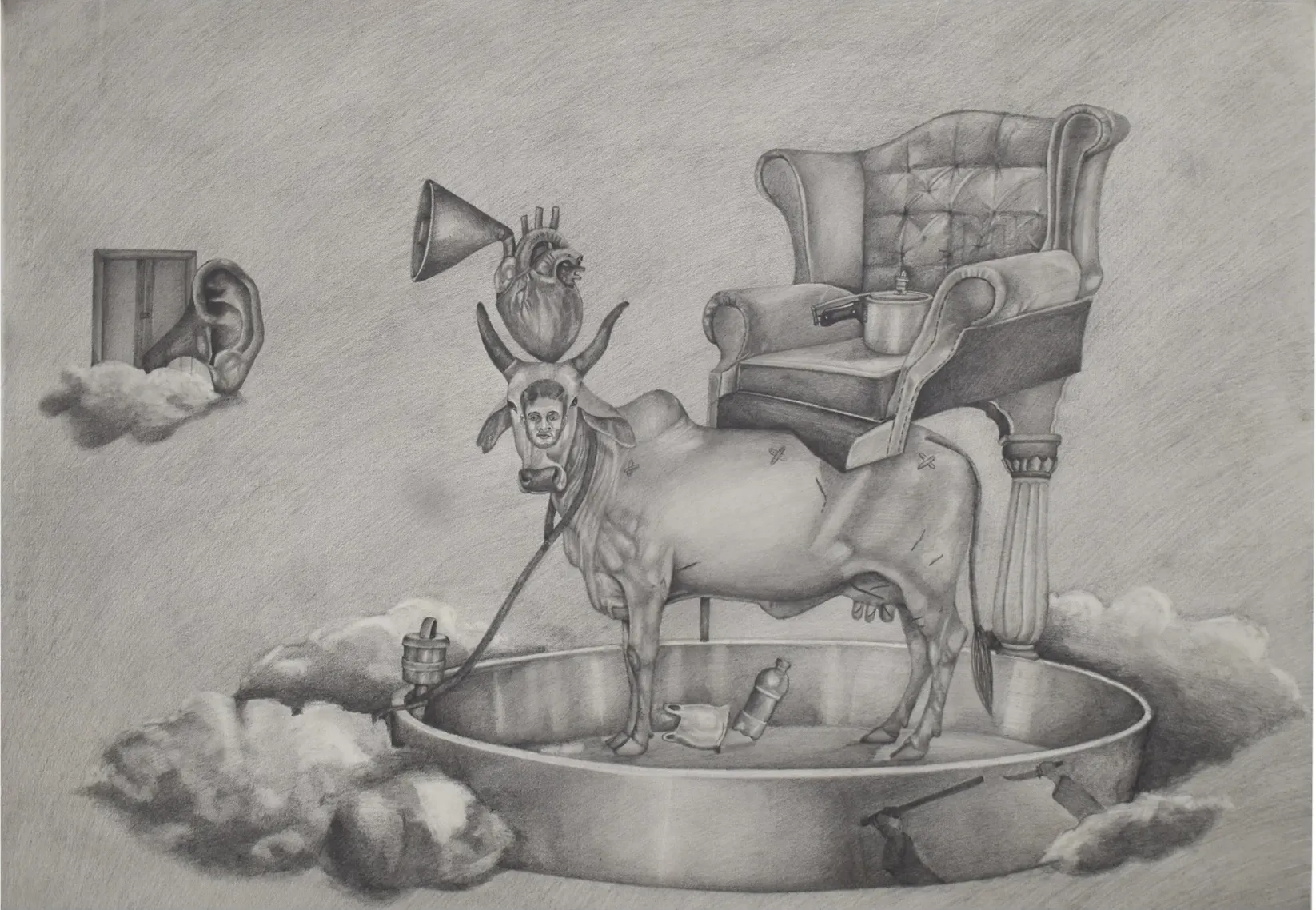
Cow in City Xl
₹80,000
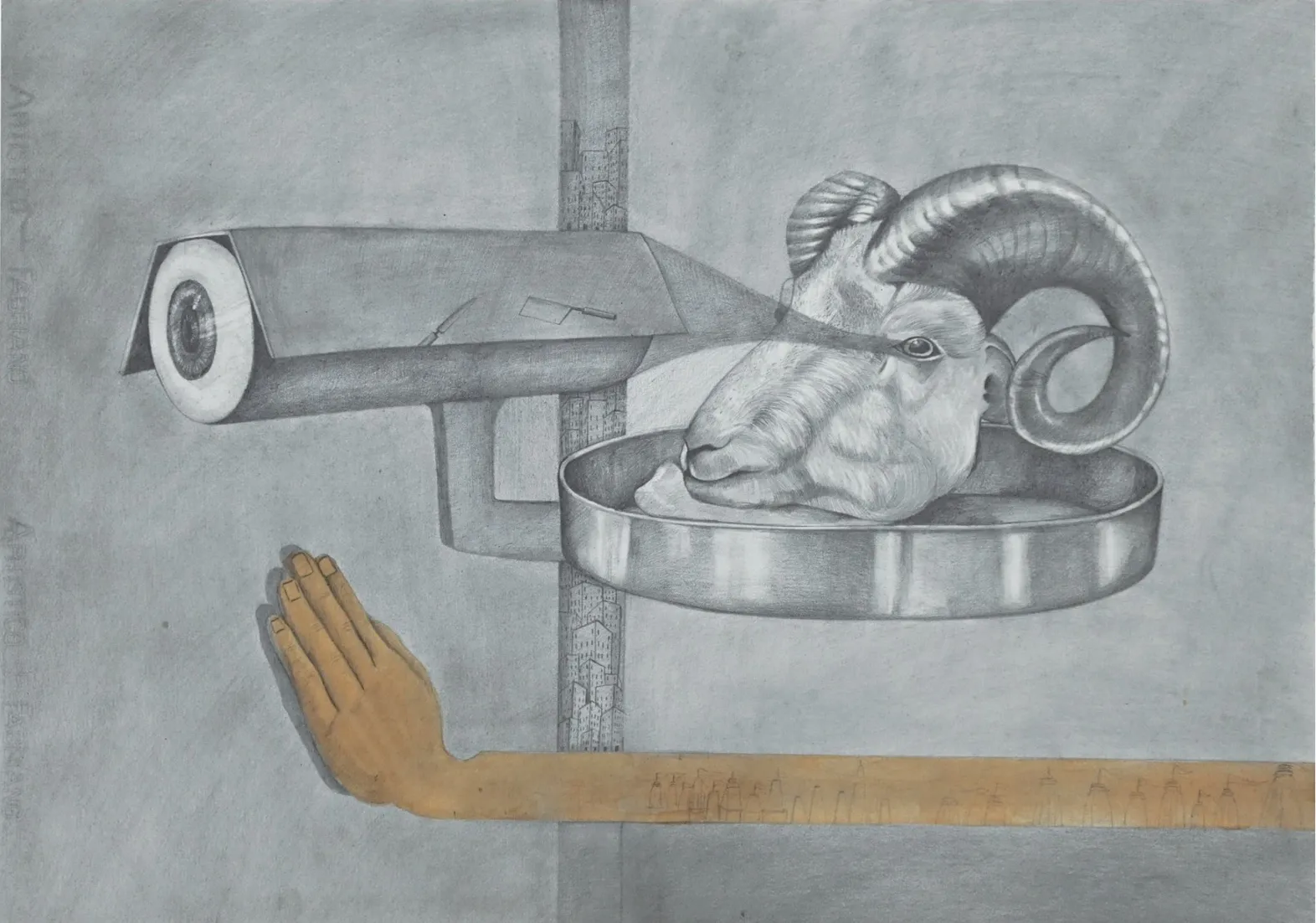
“Cow in City” is a surrealist drawing that critiques the commodification and silent suffering of animals within modern urban life. By juxtaposing symbolic objects like a throne, megaphone, anatomical heart, and surveillance tools with the image of a restrained cow, the artwork evokes a powerful commentary on exploitation, control, and voicelessness in the urban-industrial landscape.
Interested in this piece?
Chat on WhatsAppOr reach us directly at +91 79824 33408
Home visit available
Select artworks can be viewed at your home before you decide. A visit is ₹1,000 per artwork, fully adjusted against the purchase if you go ahead. See how it works.
Ask about a home visit for this pieceOr leave us a question about this piece
- Category
- Drawing
- Subcategory
- Graphite on paper
- Year
- 2024
- Dimensions
- 20 × 24 in
- Place
- Delhi
- Certificate no.
- MS-Cow in city Xl -2024
Color palette
- Gray (94%)
- White (6%)
Exact tones detected
Light GrayLight GrayLight GrayGrayGray
Description
“Cow in City” presents a deeply surreal and symbol-laden tableau that examines the intersection of urbanization, animal suffering, and human indifference. At the center stands a cow, marked with wounds and pierced by pipes, confined within a shallow metallic tray that resembles both an altar and a cage. The cow’s head is humanized with a hybrid face and crowned by a grotesque arrangement: a megaphone emerging from an anatomical heart, both mounted on the horns—turning the animal into a vessel for unheard cries. An opulent armchair rests on one of the cow’s legs, transforming it into a living pedestal for human comfort and authority. Scattered around the cow are everyday urban utensils—cups, bottles, wires—emphasizing the banal normalization of cruelty. In the sky, disembodied clouds hold a listening ear and a window, symbolizing a passive, distant observation rather than true empathy or intervention.
The drawing critiques how animals, particularly cows in the Indian urban context, are entangled in systems of religious sanctity and practical neglect. The piece forces the viewer to confront the contradictions of reverence versus exploitation. The dream-like and paradoxical elements heighten emotional tension, drawing from the visual language of surrealism to unsettle and provoke thought.
Technique Highlight:
This drawing is rendered primarily in pencil, using fine shading and controlled line work to achieve both texture and surreal realism. The artist skillfully blends anatomical precision with absurdity—most notably in the fusion of body parts and objects. The softness of the clouds contrasts with the harsh metallic textures, enhancing the visual and thematic dissonance.
Historical Context:
This work reflects the surrealist tradition of using irrational juxtapositions to critique power structures, exploitation, and alienation. Within the Indian context, it responds to ongoing urban encroachment, the plight of stray and abandoned cows, and the tension between religious symbolism and lived realities. Surrealism here becomes a tool for socio-political commentary, especially on the invisible systems of control and consumption.
Color Analysis:
The monochromatic palette underscores the emotional gravity and bleakness of the scene. It removes any distraction of decorative color, focusing attention on form, texture, and symbolism. The grayscale tones evoke a lifeless, industrial atmosphere, further amplifying the themes of surveillance, dehumanization, and decay.
Symbolism:
- Cow with hybrid face: Represents both animal and human suffering—silent and ignored.
- Chair on the cow’s back: Signifies the burden of human authority and dominance over animals.
- Megaphone & Heart: The unheard emotional cries of the oppressed, amplified yet ignored.
- Ear & Window in clouds: Passive surveillance and selective hearing; a false promise of empathy.
- Tray: Confinement, domestication, and ritualistic offering.
- Utensils: Banality of urban life consuming and discarding without awareness.
- Wounds and marks: Indications of long-term exploitation, suffering, and neglect.
Technique
This drawing is rendered primarily in pencil, using fine shading and controlled line work to achieve both texture and surreal realism. The artist skillfully blends anatomical precision with absurdity—most notably in the fusion of body parts and objects. The softness of the clouds contrasts with the harsh metallic textures, enhancing the visual and thematic dissonance.
Historical context
This work reflects the surrealist tradition of using irrational juxtapositions to critique power structures, exploitation, and alienation. Within the Indian context, it responds to ongoing urban encroachment, the plight of stray and abandoned cows, and the tension between religious symbolism and lived realities. Surrealism here becomes a tool for socio-political commentary, especially on the invisible systems of control and consumption.
Symbolism
In Cow in City, each element converges to express a haunting narrative of exploitation and silence. The cow, bearing a hybrid human face, becomes a poignant symbol of both animal and human suffering—voiceless and overlooked. Upon its back rests a grand chair, evoking the weight of human authority and dominance, turning the animal into a literal pedestal for comfort and control. Crowned with a megaphone sprouting from an anatomical heart, the composition channels the ignored emotional cries of the oppressed—amplified yet unheard. In the sky, a disembodied ear beside a window floats within the clouds, suggesting passive surveillance and selective hearing—a false gesture of empathy. The shallow metal tray that encloses the scene becomes both an altar and a cage, signifying confinement, domestication, and sacrificial offering. Scattered around are mundane utensils—cups, wires, bottles—symbols of urban life’s casual consumption and disregard. The cow's body, scarred with wounds and markings, bears testimony to prolonged suffering and systemic neglect, embodying the brutal cost of urban indifference.
Catalogued May 6, 2025
From the same artist
More by Madhusudhan Sharma


Keep exploring