Other
Cow in City XlV
₹1,20,000
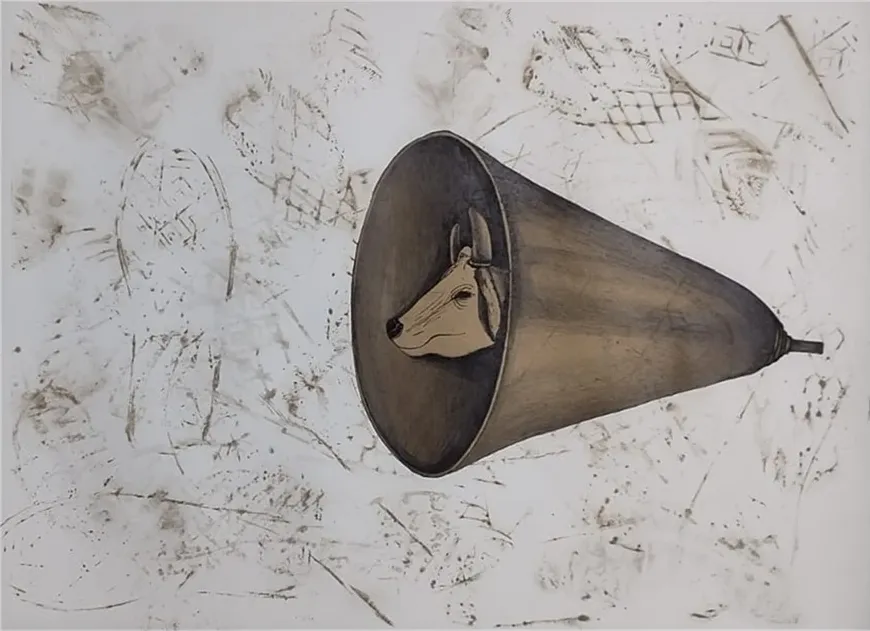
In this surreal artwork, a cow’s head emerges from a loudspeaker cone, evoking the silenced voice of animals amid the noise of urban life, surrounded by chaotic shoe imprints that symbolize relentless human encroachment.
Interested in this piece?
Chat on WhatsAppOr reach us directly at +91 79824 33408
Home visit available
Select artworks can be viewed at your home before you decide. A visit is ₹1,000 per artwork, fully adjusted against the purchase if you go ahead. See how it works.
Ask about a home visit for this pieceOr leave us a question about this piece
- Category
- Drawing
- Subcategory
- Graphite and texture on paper
- Year
- 2021
- Dimensions
- 22 × 30 in
- Place
- Delhi
- Certificate no.
- MS-COW-XlV-2024
Color palette
- Gray (91%)
- White (8%)
- Black (1%)
Exact tones detected
Light GrayLight GrayLight GrayLight GrayWhite
Description
"Cow in City" presents a powerful surrealist vision where the sacred and the mechanical are disturbingly intertwined. At the center of the composition, the head of a cow is enclosed within the horn of a loudspeaker, emerging with quiet dignity from this unexpected mechanical casing. The contrast between the organic softness of the cow and the cold, industrial shape of the speaker creates a tension that drives the emotional core of the piece.
Surrounding the central figure are dozens of chaotic shoe and boot prints, imprinted across the background. These overlapping marks evoke the constant trampling, both literal and metaphorical, that animals endure in urban environments. The background, like a worn city pavement, suggests a world where animals are silenced, their presence reduced to background noise.
The loudspeaker—a device meant for amplification—ironically becomes a symbol of mute protest. The cow appears trapped, unheard, confined within the very tool that should have given it a voice. This paradox is the essence of the work’s critique: in the loud chaos of modern cities, the needs and rights of animals go unheard.
This drawing uses distortion and symbolism to highlight the voicelessness of animals in the face of aggressive human development, modern technology, and environmental neglect.
Technique Highlight
This surrealist drawing, likely executed using graphite, charcoal, or ink on paper, masterfully combines realistic rendering with symbolic abstraction to create a powerful visual narrative. The central figure—a meticulously shaded cow’s head enclosed within a loudspeaker cone—is drawn with striking realism, contrasting sharply with the chaotic, abstract background. The background itself is layered with shoe prints created through physical pressure or transfer techniques, adding a raw, urban texture that evokes the relentless movement of city life. The nuanced contrast between the finely detailed central subject and the surrounding disorder not only enhances visual depth but also amplifies the emotional tension of the piece, underscoring the alienation and silencing of animals in modern urban environments.
- Medium: Drawing (likely graphite, charcoal, or ink on paper)
- Style: Surrealism with realistic rendering of the cow and symbolic abstraction in the background
- Surface effects: Shoe prints created using physical pressure or transfer techniques enhance the urban texture
- Contrast: Fine shading on the speaker cone and cow head against a chaotic background adds emotional focus
Historical Context
The piece reflects rising global concern over animal displacement, urban noise pollution, and industrial dominance over nature. In the Indian context, where cows are revered yet frequently neglected or exploited in urban settings, the work becomes even more potent. It critiques a society where tradition and modernity collide, often leaving voiceless beings—like the cow—trapped between reverence and neglect.
The use of loudspeakers, common in Indian public life for announcements, religion, or celebration, is reimagined here to speak about the absence of voice rather than its amplification.
Color Analysis
The artwork employs a muted palette dominated by browns, greys, and blacks, reinforcing its somber and contemplative mood. This near-monochromatic color scheme effectively heightens the sense of bleakness and emotional restraint, aligning with the surrealist tone of the piece. The background is textured with smudges and shoe prints rendered in earthy tones, mimicking the appearance of dust, dirt, and urban grime. These surface effects evoke a sense of physical and psychological wear, capturing the oppressive atmosphere of a harsh city terrain where nature and innocence, symbolized by the cow, are engulfed by the relentless march of urbanization.
- Dominant tones: Muted browns, greys, and blacks
- Monochromatic scheme enhances the bleakness and emotional restraint
- Background smudges and prints in earthy tones mimic dust, dirt, and wear—suggesting a harsh city terrain
Symbolism
The symbolism in this surreal artwork is layered and poignant. The cow’s head, delicately rendered, stands for innocence, sacredness, and the voiceless victimhood of animals caught in the machinery of urban life. Its placement within a loudspeaker cone is steeped in irony—the very device meant to amplify voices becomes a symbol of silenced protest, where mechanized communication drowns out natural expression. The cone, with its tunnel-like form, evokes a sense of both focus and entrapment, directing attention while simultaneously imprisoning the subject. Surrounding the central figure, scattered human footprints mark the surface, embodying the careless dominance of humanity—its relentless encroachment and disregard for the natural world. Together, these elements offer a sharp critique of urbanization and its dehumanizing effects on animals and nature.
- Cow’s head: Innocence, sacredness, voiceless victimhood
- Loudspeaker cone: Irony of silenced protest, mechanized communication overpowering natural expression
- Footprints: Human dominance, carelessness, urban invasion, and trampling over nature
- Cone shape: Directionality of sound becomes a cage-like tunnel—suggesting both focus and entrapment
Technique
This surrealist drawing, likely executed using graphite, charcoal, or ink on paper, masterfully combines realistic rendering with symbolic abstraction to create a powerful visual narrative. The central figure—a meticulously shaded cow’s head enclosed within a loudspeaker cone—is drawn with striking realism, contrasting sharply with the chaotic, abstract background. The background itself is layered with shoe prints created through physical pressure or transfer techniques, adding a raw, urban texture that evokes the relentless movement of city life. The nuanced contrast between the finely detailed central subject and the surrounding disorder not only enhances visual depth but also amplifies the emotional tension of the piece, underscoring the alienation and silencing of animals in modern urban environments.
Historical context
The piece reflects rising global concern over animal displacement, urban noise pollution, and industrial dominance over nature. In the Indian context, where cows are revered yet frequently neglected or exploited in urban settings, the work becomes even more potent. It critiques a society where tradition and modernity collide, often leaving voiceless beings—like the cow—trapped between reverence and neglect. The use of loudspeakers, common in Indian public life for announcements, religion, or celebration, is reimagined here to speak about the absence of voice rather than its amplification.
Symbolism
The symbolism in this surreal artwork is layered and poignant. The cow’s head, delicately rendered, stands for innocence, sacredness, and the voiceless victimhood of animals caught in the machinery of urban life. Its placement within a loudspeaker cone is steeped in irony—the very device meant to amplify voices becomes a symbol of silenced protest, where mechanized communication drowns out natural expression. The cone, with its tunnel-like form, evokes a sense of both focus and entrapment, directing attention while simultaneously imprisoning the subject. Surrounding the central figure, scattered human footprints mark the surface, embodying the careless dominance of humanity—its relentless encroachment and disregard for the natural world. Together, these elements offer a sharp critique of urbanization and its dehumanizing effects on animals and nature.
Catalogued May 9, 2025
From the same artist
More by Madhusudhan Sharma


Keep exploring