Other
Tapped Vision
₹80,000
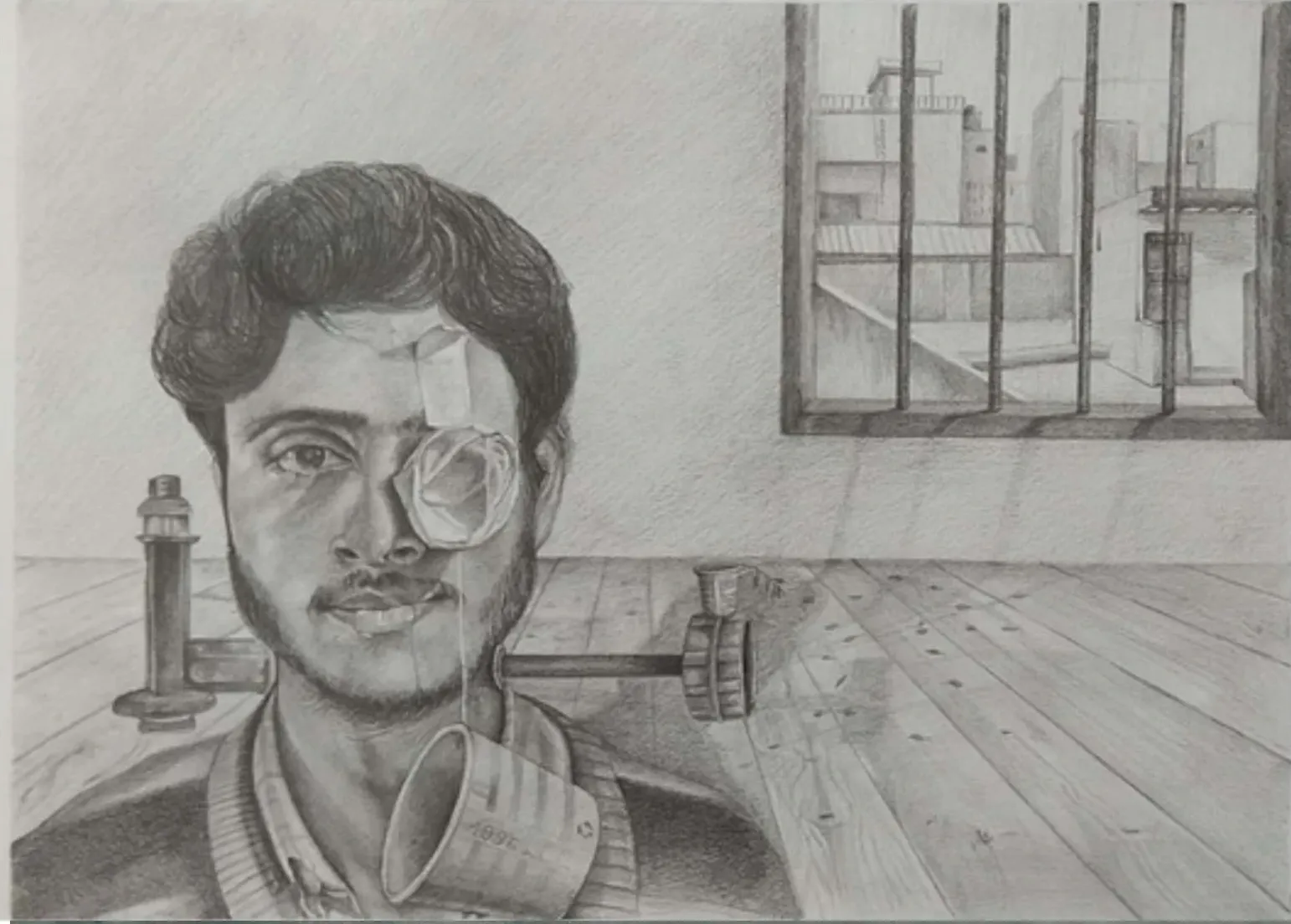
Tapped Vision is a surrealist portrait that explores how urban life, pollution, and emotional numbness distort human identity. A man’s face is fused with pipes, a gas burner, and a taped-over eye, symbolizing blindness to environmental decay and societal pressure. The plastic cup hanging from his eye underscores lasting ecological damage. Set in a stark room with barred windows, the piece critiques modern life’s dehumanization and asks whether we can still see the true cost of “progress.”
Interested in this piece?
Chat on WhatsAppOr reach us directly at +91 79824 33408
Home visit available
Select artworks can be viewed at your home before you decide. A visit is ₹1,000 per artwork, fully adjusted against the purchase if you go ahead. See how it works.
Ask about a home visit for this pieceOr leave us a question about this piece
- Category
- Drawing
- Subcategory
- Graphite on paper
- Year
- 2024
- Dimensions
- 11 × 15 in
- Place
- Delhi
- Certificate no.
- MS-Tapped Vision -2024
Color palette
- Gray (94%)
- White (6%)
Exact tones detected
Light GrayLight GrayLight GrayLight GrayLight Gray
Description
In Tapped Vision, the surrealist composition presents a young man whose face and body are integrated with gas burner pipe an unsettling portrayal of how modern urban life infiltrates the human spirit. A prominent feature is his bandaged eye, covered in tape and paper-like material, symbolizing a literal and metaphorical blindness. This visual obstruction speaks to how people often ignore environmental decay or are numbed by the relentless stress and sensory overload of industrial life.
A gas burner pipe pierces through the subject’s neck, with valves and taps extending from either side, transforming the human form into a mere mechanical system—controlled, utilitarian, and dehumanized. The plastic cup suspended from the tape on his eye has remained untouched since birth, a haunting reminder of how plastic pollution leaves a lasting, damaging imprint on both individuals and the planet.
The gas burner signifies Earth's pressure points—constantly being manipulated and overburdened. The suffocation the figure experiences mirrors the planet's own as it bears the unsustainable weight of human excess.
The room is stark and orderly, yet cold. Harsh sunlight cuts through the barred window, casting shadows that evoke a prison-like stillness. Outside, the crowded cityscape appears within reach, yet distant—highlighting how urban life, though physically close, often feels emotionally isolating.
Tapped Vision is a critique of the fusion between man and machine, the commodification of human life, and the growing disconnect from nature and self. It raises urgent questions about the price we pay for progress—and whether we’re even able to perceive that cost anymore.
Technique Highlight:
Executed with precise graphite shading, the artist masterfully blends realism with surrealism. The smooth textures, refined facial anatomy, and sharp contrasts in light and shadow lend the surreal components a tangible, unsettling presence.
Historical Context:
Surrealism emerged as a reaction to the alienation of modern society in the 20th century, particularly post-WWI. This artwork continues that tradition by reflecting how contemporary urban life and environmental exploitation disfigure identity and perception—issues increasingly relevant in the 21st century as cities grow denser and mental health crises rise.
Color Analysis:
Rendered in grayscale, the absence of color emphasizes emotional detachment and bleakness. The stark light and shadow contrasts reinforce themes of exposure, vulnerability, and psychological fragmentation.
Symbolism
In a world where perception is often obscured and emotions are quantified, the imagery of a bandaged eye aptly encapsulates the struggle of individuals facing denial and emotional blindness, overshadowed by the complexities of modern existence. Similarly, the metaphor of pipes and valves evokes the industrialization that has stripped away autonomy, trapping people within rigid systems akin to a mechanical assembly line, where their identities are reduced to mere components. This dehumanization is further reflected in the use of a plastic measuring cup, emphasizing the emotional quantification that promotes wastefulness, both materially and spiritually. Meanwhile, a barred window serves as a potent symbol of psychological confinement, presenting an illusion of freedom while the boundaries of the self are tightly restricted. Against this backdrop, a bustling cityscape emerges, where the pressures of urban life create an overwhelming proximity between individuals yet foster a profound disconnection from the natural world, amplifying the sense of isolation amidst the masses. Each of these elements interweaves to illustrate the intricate layers of modern life, where emotional experiences are often diminished, and true autonomy feels increasingly elusive.
- Bandaged Eye: Obstructed perception, denial, emotional blindness.
- Pipes & Valves: Industrialization, lack of autonomy, being "plumbed" into systems.
- Plastic Measuring Cup: Emotional quantification, dehumanization, waste.
- Barred Window: Psychological confinement, illusion of freedom.
- Cityscape: Urban pressures, overwhelming proximity, disconnection from nature.
Technique
Executed with precise graphite shading, the artist masterfully blends realism with surrealism. The smooth textures, refined facial anatomy, and sharp contrasts in light and shadow lend the surreal components a tangible, unsettling presence.
Historical context
Surrealism originated in the 20th century as a response to the disconnection and psychological trauma brought on by modern life, especially after World War I. This artwork carries that legacy forward, confronting how today’s urban chaos, environmental degradation, and technological saturation continue to distort human identity and perception. In an era marked by rising mental health struggles and increasingly dense, mechanized cities, the piece captures the modern individual's internal conflict—trapped between industrial progress and the loss of emotional and ecological balance.
Symbolism
In a world where perception is often obscured and emotions are quantified, the imagery of a bandaged eye aptly encapsulates the struggle of individuals facing denial and emotional blindness, overshadowed by the complexities of modern existence. Similarly, the metaphor of pipes and valves evokes the industrialization that has stripped away autonomy, trapping people within rigid systems akin to a mechanical assembly line, where their identities are reduced to mere components. This dehumanization is further reflected in the use of a plastic measuring cup, emphasizing the emotional quantification that promotes wastefulness, both materially and spiritually. Meanwhile, a barred window serves as a potent symbol of psychological confinement, presenting an illusion of freedom while the boundaries of the self are tightly restricted. Against this backdrop, a bustling cityscape emerges, where the pressures of urban life create an overwhelming proximity between individuals yet foster a profound disconnection from the natural world, amplifying the sense of isolation amidst the masses. Each of these elements interweaves to illustrate the intricate layers of modern life, where emotional experiences are often diminished, and true autonomy feels increasingly elusive.
Catalogued May 8, 2025
From the same artist
More by Madhusudhan Sharma


Keep exploring