

Other
Cow in City XXI
₹1,00,000
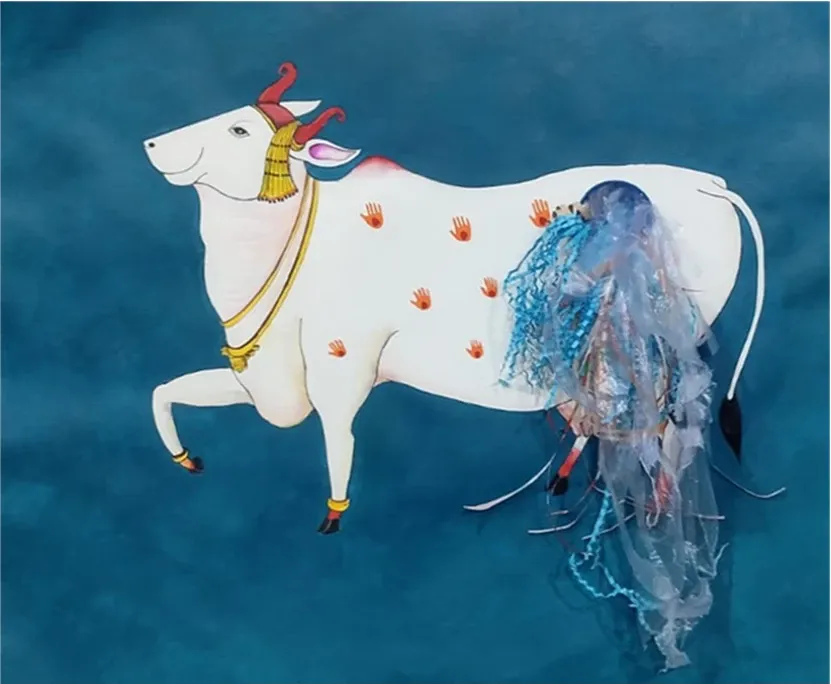
Cow in City reinterprets traditional Pichwai art with a modern ecological lens. A sacred cow, rendered in a classical style, bears traces of pollution and modern decay—its stomach replaced by flowing strands of plastic and shredded paper, transforming the symbol of purity into a site of contamination and exploitation.
Interested in this piece?
Chat on WhatsAppOr reach us directly at +91 79824 33408
Home visit available
Select artworks can be viewed at your home before you decide. A visit is ₹1,000 per artwork, fully adjusted against the purchase if you go ahead. See how it works.
Ask about a home visit for this pieceOr leave us a question about this piece
- Category
- Painting
- Subcategory
- Acrylic, paper pasting
- Year
- 2025
- Dimensions
- 22 × 30 in
- Place
- Delhi
- Certificate no.
- MS-Cow in City XXI-2025
Color palette
- Blue (63%)
- White (18%)
- Teal (15%)
- Gray (2%)
- Brown (1%)
- Red (1%)
Exact tones detected
Dark BlueDark BlueDark BlueWhiteTeal
Description
This mixed-media acrylic painting titled Cow in City combines the serene grace of Pichwai art with the harsh realities of modern urban life. The work presents a stylized white cow—symbolizing Kamadhenu, the divine wish-fulfilling cow in Indian mythology—against a rich teal-blue backdrop. Rendered with minimalist but elegant lines, adorned with gold jewelry and traditional hand motifs, the cow seems divine and untouched at first glance.
However, the moment of rupture occurs at the cow’s stomach. Instead of nourishing food, what emerges is a tangled mess of shredded plastic, blue threads, and newspaper strips, cascading like a polluted river. This material intervention abruptly breaks the spiritual serenity, compelling the viewer to confront the environmental crisis and the commodification of nature.
The piece critiques how urbanization, consumerism, and environmental neglect have transformed symbols of sanctity into exploited resources.
The juxtaposition of traditional Indian iconography and modern materials speaks to a broader cultural tension: a society that still clings to religious symbols while ignoring the damage inflicted upon them in real life. The work challenges viewers to rethink what reverence means in a world where environmental degradation is rampant and often overlooked in the name of progress.
Technique Highlight
This contemporary-Pichwai fusion reimagines devotional art through a subversive, mixed-media lens. The cow’s form is painted in vivid acrylic, its luminous hues and intricate patterns honoring the traditional Pichwai style—flat, radiant, and reverent. Yet, this sacred iconography is ruptured by its own udders: plastic bags sag like diseased teats, synthetic blue threads mimic contaminated milk, and coiled newspaper strips spill like bureaucratic waste. The collision of glossy paint and crude collage materials doesn’t just contrast—it indicts, transforming the canvas into a tactile battlefield between purity and pollution. Here, the celestial cow of Hindu lore is reborn as a monument to synthetic decay, her body a site where worship and waste violently coexist.
Historical Context
Pichwai painting originates from Nathdwara, Rajasthan, and traditionally depicts the life of Lord Krishna, often through the representation of cows, which are deeply revered in Hinduism. The cow is seen not only as a sacred animal but also as a source of nourishment and a symbol of abundance and peace.
However, in present-day India, especially in urban contexts, cows are often neglected, mistreated, or forced to survive on city waste. This artwork bridges the historical reverence of the cow with her contemporary plight, highlighting the ironic disconnect between worship and actual treatment.
Color Analysis
The teal-blue background hums with sacred serenity—a celestial wash reminiscent of temple murals and Krishna’s infinite sky. Against this divine canvas, the cow gleams ritual-white, her form a luminous vessel of purity. Yet this sanctity is violated by smeared red handprints, at once devotional and sinister: are they blessings or bloodstains? The udders scream in synthetic rebellion—neon plastics and garish threads metastasizing like industrial tumors. Their toxic pinks and electric blues don’t just clash; they desecrate, turning the spiritual palette into a battleground. Every hue here is dual-edged: the blue of transcendence versus pollution’s rainbow, the white of divinity now a target, the red of both worship and wound.
- Teal/Blue Background: A peaceful, spiritual hue, often associated with the divine in Indian art. It enhances the feeling of sanctity and contrasts with the disruption caused by the plastic materials.
- White Cow: Traditionally a symbol of purity and divinity, the stark white enhances her sacred identity.
- Red Handprints: Possibly evoking devotional rituals or the many unseen hands that exploit her; they also resemble blood, hinting at silent violence.
- Plastic Colors: The colorful, synthetic hues of the plastic and thread are visually disruptive—symbolizing toxicity, pollution, and artificiality.
Symbolism
The cow, rendered in reverent Pichwai style, embodies Gaumata—India’s divine mother, a timeless symbol of nourishment and cultural sanctity. Yet her stomach with plastic waste and shredded newspaper, a visceral corruption of her life role. The handprints smeared across her body echo temple rituals, but here they stain rather than sanctify, tracing humanity’s exploitative grip on nature. This fusion of devotional painting and trash collage doesn’t just depict conflict—it enacts it, forcing sacred iconography to confront the waste we’ve buried in its soil. Tradition and trash merge into a single grotesque testament: even holiness is not immune to commodification.
- Cow: Represents the divine feminine, purity, sustenance, and Indian cultural heritage.
- Plastic & Paper Waste: Represents environmental degradation, consumer culture, and the commodification of sacred resources.
- Handprints: Evoke religious rituals, but here they may also signify exploitation or commodification.
- Fusion of Media: Symbolizes the clash between traditional values and modern ecological reality.
Technique
This contemporary-Pichwai fusion reimagines devotional art through a subversive, mixed-media lens. The cow’s form is painted in vivid acrylic, its luminous hues and intricate patterns honoring the traditional Pichwai style—flat, radiant, and reverent. Yet, this sacred iconography is ruptured by its own udders: plastic bags sag like diseased teats, synthetic blue threads mimic contaminated milk, and coiled newspaper strips spill like bureaucratic waste. The collision of glossy paint and crude collage materials doesn’t just contrast—it indicts, transforming the canvas into a tactile battlefield between purity and pollution. Here, the celestial cow of Hindu lore is reborn as a monument to synthetic decay, her body a site where worship and waste violently coexist.
Historical context
Pichwai painting originates from Nathdwara, Rajasthan, and traditionally depicts the life of Lord Krishna, often through the representation of cows, which are deeply revered in Hinduism. The cow is seen not only as a sacred animal but also as a source of nourishment and a symbol of abundance and peace. However, in present-day India, especially in urban contexts, cows are often neglected, mistreated, or forced to survive on city waste. This artwork bridges the historical reverence of the cow with her contemporary plight, highlighting the ironic disconnect between worship and actual treatment.
Symbolism
The cow, rendered in reverent Pichwai style, embodies Gaumata—India’s divine mother, a timeless symbol of nourishment and cultural sanctity. Yet her stomach with plastic waste and shredded newspaper, a visceral corruption of her life role. The handprints smeared across her body echo temple rituals, but here they stain rather than sanctify, tracing humanity’s exploitative grip on nature. This fusion of devotional painting and trash collage doesn’t just depict conflict—it enacts it, forcing sacred iconography to confront the waste we’ve buried in its soil. Tradition and trash merge into a single grotesque testament: even holiness is not immune to commodification.
Catalogued May 19, 2025
From the same artist
More by Madhusudhan Sharma


Keep exploring
Related artworks


