

Other
Cow in City Vlll
₹1,20,000
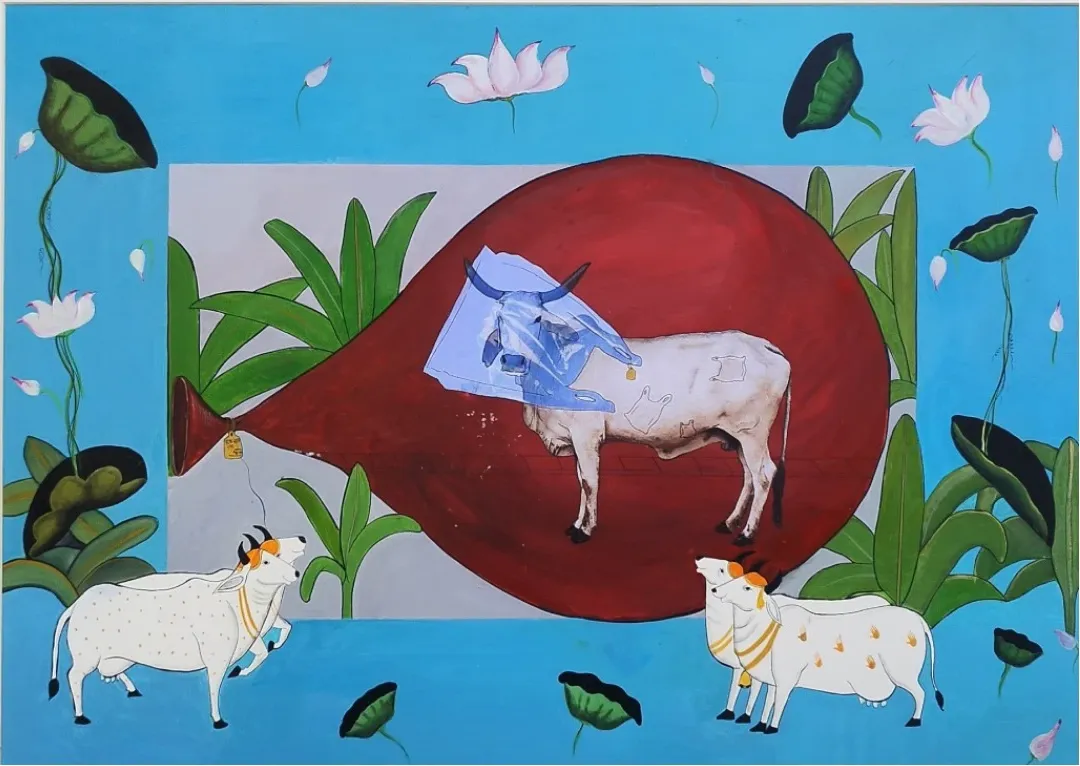
This artwork blends the sacred Nathdwara style with a contemporary critique of urbanization and animal neglect. A white bull, trapped inside a horn with its head covered in a polythene bag, symbolizes pollution, technological intrusion, and silenced suffering. Surrounded by traditional imagery and unaware cows, the piece highlights the growing disconnect between cultural reverence for animals and their exploitation in modern life.
Interested in this piece?
Chat on WhatsAppOr reach us directly at +91 79824 33408
Home visit available
Select artworks can be viewed at your home before you decide. A visit is ₹1,000 per artwork, fully adjusted against the purchase if you go ahead. See how it works.
Ask about a home visit for this pieceOr leave us a question about this piece
- Category
- Painting
- Subcategory
- painting
- Year
- 2024
- Dimensions
- 22 × 30 in
- Place
- Delhi
- Certificate no.
- MS-COW-Nathdwarpainting-2024
Color palette
- Teal (44%)
- Gray (20%)
- Red (17%)
- Green (11%)
- White (8%)
- Other (1%)
Exact tones detected
TealTealDark RedWhiteDark Green
Description
This artwork merges the classical grace of the Nathdwara painting tradition with a layered, contemporary narrative. At its heart stands a solemn white bull, enclosed within a large horn—its head shrouded by a polythene bag. This haunting image symbolizes technological intrusion, dehumanization, and the pollution of sustenance. Just behind it floats a red balloon, representing urban modernity and material ambition—an ominous force on the verge of engulfing not only the bull’s presence but also our cultural heritage and empathy for nature.
Surrounding this central figure is a surreal, semi-architectural space, evoking a sense of enclosure and isolation. Outside this space, three stylized cows—adorned with ceremonial bells and festive decorations—stand unaware, detached from the suffering within, suggesting a collective blindness or complacency.
The backdrop is lush and dreamlike: blue skies, oversized lotus blooms, and stylized banana leaves, all drawn from the Nathdwara visual lexicon, evoking divinity and calm. Yet this serenity is pierced by the presence of digital fragments and anatomical overlays, disrupting the idyll. This clash between old and new, sacred and synthetic, generates a tension that reflects the conflicted relationship between traditional reverence for animals and their modern-day marginalization.
The painting becomes a quiet yet powerful commentary on the silent suffering of animals—particularly cows, sacred and symbolic in Indian culture—amid the forces of urbanization, mechanization, and indifference. The bull within the horn becomes a metaphor for muffled voices, systemic neglect, and the fading echoes of compassion.
Technique Highlight
Combines traditional Nathdwara painting techniques with contemporary media.
Materials include gouache or acrylic on paper or canvas, enhanced with digital collage and photo-transferred imagery.
Uses flat perspective, intricate ornamentation, and stylized flora inspired by the Pichwai tradition.
Maintains the spiritual and decorative essence of classical Indian art.
Introduces disruption through modern visual elements, such as a mechanical head overlay.
Creates a striking conceptual contrast between serenity and intrusion.
Encourages reflection on the effects of modernization on cultural identity and ecological balance.
Historical Context
Nathdwara paintings emerged in Rajasthan, India, centered around devotion to Lord Krishna, particularly in his child form, Shrinathji. These works often depict cows, gopis, and pastoral life, symbolizing divine love and harmony with nature. By embedding a suffering bull within this context, the artist critiques the decline of these values in the modern era, where animals—once worshipped—are now commodified or ignored.
Color Analysis
Turquoise Blue Background: Suggests calmness, but in this setting may also imply emotional distance or spiritual silence.
Rich Reds and Browns: The large horn and central frame create emotional depth and a sense of urgency or inner violence.
Greens of Nature: Represent the traditional harmony between animals and the environment, now seemingly overtaken or enclosed.
Muted Whites & Yellows: On the animals, symbolize purity and innocence, contrasting with the invasive blue mechanical overlay.
Symbolism
The Bull Inside the Horn: A potent metaphor for voicelessness—what should be an amplification device becomes a prison of silence.
Polythene Bag (on the bull): Symbolizes the suffocating effects of industrialization, scientific domination, and experimentation on animals.
Lotuses and Plants: Traditionally represent purity, regeneration, and divinity; here, they appear as silent witnesses to suffering, emphasizing the disconnect between sacred imagery and present reality.
Polythene Bags on the Cows: Reference ceremonial reverence laced with cultural hypocrisy—highlighting how symbolic worship often fails to protect real animals from harm.
Technique
Mixed Media Fusion: This work seamlessly combines traditional Nathdwara painting techniques—using gouache or acrylic on paper or canvas—with contemporary elements like digital collage and photo-transferred imagery. The flat perspective, ornamental detailing, and stylized flora are drawn directly from the Pichwai tradition, preserving its spiritual and decorative essence. However, the layered visual language introduces disruption: a mechanical head overlay interrupts the calm, invoking a powerful conceptual contrast. This tension between tradition and intrusion challenges viewers to confront the impact of modernization on cultural and ecological harmony.
Historical context
Nathdwara paintings emerged in Rajasthan, India, centered around devotion to Lord Krishna, particularly in his child form, Shrinathji. These works often depict cows, gopis, and pastoral life, symbolizing divine love and harmony with nature. By embedding a suffering bull within this context, the artist critiques the decline of these values in the modern era, where animals—once worshipped—are now commodified or ignored.
Symbolism
The bull inside the horn serves as a striking metaphor for voicelessness—where an instrument of amplification becomes a prison of silence. The polythene bag over the bull’s head represents the suffocating grip of industrialization, scientific dominance, and the objectification of animals through medical or technological experimentation. Lotuses and other plants, traditionally symbols of purity, regeneration, and the divine, become passive observers of suffering—highlighting the contrast between sacred symbolism and harsh reality. The polythene bags on the cows evoke ceremonial reverence tainted by cultural hypocrisy, revealing how symbolic worship often fails to translate into actual protection or compassion for living beings.
Composition analysis
This artwork blends traditional aesthetics with modern critique through a carefully structured composition. The central bull inside the red horn draws immediate attention, symbolizing voicelessness and pain. Symmetrical pairs of cows balance the piece, evoking traditional harmony while contrasting the bull's suffering. Layered rectangular planes create a theatrical, staged effect, encouraging viewers to interpret the work as a symbolic tableau. Framing with nature, including lotus flowers and green foliage, adds a divine aura that is disrupted by the bull’s mechanical overlay, symbolizing modern intrusion. The translucent blue headgear introduces a modern visual language, highlighting hidden violence. The horn shape guides the gaze inward, symbolizing both amplification and entrapment. Finally, negative space surrounding the bull reflects societal indifference to animal suffering, inviting contemplation on the disconnect between symbolism and reality.
Cultural significance
This artwork draws deeply from Indian visual traditions, especially the Nathdwara painting style, known for its devotional depictions of cows and deities. By placing the cow—a sacred symbol in Indian culture—at the center of a narrative about suffering, neglect, and urban intrusion, the piece challenges viewers to reflect on the dissonance between cultural reverence and real-world treatment of animals. The ceremonial elements, such as decorated cows and lotus motifs, highlight the enduring role of animals in spiritual life, while their juxtaposition with mechanical overlays and polluted imagery critiques the hollowing of that symbolism in the face of modern industrialization.
Catalogued May 5, 2025
From the same artist
More by Madhusudhan Sharma


Keep exploring
Related artworks


