

Other
Cow in City Vlll
₹1,20,000
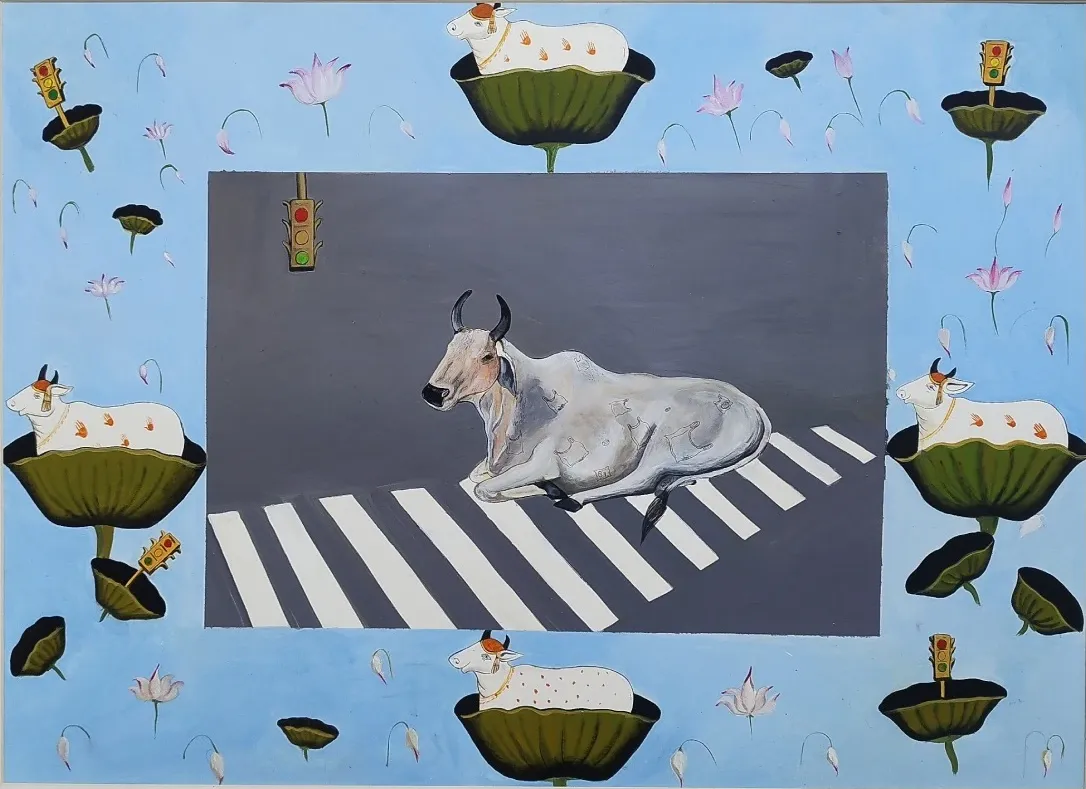
In this Nathdwara-style composition, a cow sits motionless on a zebra crossing under silent traffic lights, surrounded by floating cows on lotus pods—merging divine symbolism with urban alienation to question the place of sacred animals in a mechanized, indifferent world.
Interested in this piece?
Chat on WhatsAppOr reach us directly at +91 79824 33408
Home visit available
Select artworks can be viewed at your home before you decide. A visit is ₹1,000 per artwork, fully adjusted against the purchase if you go ahead. See how it works.
Ask about a home visit for this pieceOr leave us a question about this piece
- Category
- Painting
- Subcategory
- Acrylic on paper
- Year
- 2024
- Dimensions
- 22 × 30 in
- Place
- Delhi
- Certificate no.
- MS-COW-Nathdwarpainting-Vlll-2024
Color palette
- Teal (44%)
- Gray (42%)
- White (7%)
- Other (3%)
- Black (3%)
- Brown (1%)
Exact tones detected
TealGrayGrayTealTeal
Description
This artwork is a modern reinterpretation of the traditional Nathdwara style, infused with urgent social commentary. At the center of the composition lies a realistic cow seated on a zebra crossing, against a stark grey urban backdrop. Above and beside it, traffic lights hang without direction, suspended in stillness, and surrounded by an ethereal, decorative blue border where cows rest on blooming lotus pods, floating serenely in a dreamlike space.
This duality—the harsh geometry of city infrastructure within the central frame and the delicate, sacred world of lotuses and adorned cows surrounding it—speaks volumes. The cow, an animal revered in Indian culture, is shown out of place, forgotten and stranded in an indifferent urban environment where neither divine reverence nor practical care exist.
The outer decorative border, a clear nod to the Pichwai/Nathdwara tradition, encases the cow in a memory of what it once symbolized: purity, patience, and maternal divinity. Meanwhile, the central image becomes a silent protest against neglect, symbolizing how reverence has turned into indifference.
Technique Highlight:
- Hybrid Style: Combines traditional miniature detailing—like stylized lotuses, flat color planes, and ornamental balance—with contemporary visual elements such as the zebra crossing, traffic lights, and grey tones.
- Flat Perspective Meets Depth: The artwork merges flat ornamental motifs with a more shaded and realistic central figure, enhancing the tension between the decorative past and the unfeeling present.
- Visual Framing: Uses an inner rectangle to isolate the cow from the more symbolic outer world, effectively creating a "painting within a painting."
Historical Context:
Nathdwara paintings, especially Pichwai art, traditionally depict Lord Krishna, cows, and pastoral scenes infused with divinity and festivity. Cows are central symbols of nurturing and sacredness in these works. In this artwork, that context is purposefully inverted: the sacred cow now sits not in a pastoral ideal but in an urban setting where its symbolic meaning is ignored or commodified. The broken continuity from sacred art to modern reality is both a critique and a lament.
Color Analysis:
- Grey Urban Center: The cold, neutral grey tone of the zebra crossing reflects urban sterility and indifference.
- Sky Blue Border: Represents calmness and transcendence but also a detachment from reality, as the divine/symbolic world floats away from lived experience.
- Green Lotus Pods: These recall traditional sanctity and life but now act as isolated islands—echoing lost reverence.
- White Cows with Orange Spots: Traditional representations of purity and ceremonial respect, contrasting sharply with the neglected central figure.
- Muted Pastels: The overall use of soft pastels offers a false sense of peace, juxtaposed against the discomfort of the central subject.
Symbolism:
- Zebra Crossing: Represents urban systems and a structured environment where the cow is misplaced, ignored, or even in danger.
- Traffic Lights: Hung decoratively yet non-functional, they symbolize false order or a system that pretends to control but actually neglects.
- Lotus Pods: Traditionally symbols of spiritual purity, they now hold cows like trophies or museum pieces, hinting at cultural idolization without real care.
- Central Cow’s Posture: Passive and vulnerable, it evokes helplessness, exhaustion, and invisibility in a modern system.
Technique
The artwork employs a hybrid style that merges traditional miniature detailing—such as stylized lotuses, flat color planes, and ornamental symmetry—with contemporary visual elements like zebra crossings, traffic lights, and industrial grey tones. This fusion creates a striking contrast between the sacred aesthetics of the past and the cold realities of the present. The flat perspective, characteristic of classical Indian art, is disrupted by the more shaded and realistic treatment of the central figure, heightening the tension between a decorative heritage and a desensitized modern world. Additionally, the use of visual framing—through an inner rectangular border—isolates the central cow from its surroundings, creating a “painting within a painting” effect that emphasizes the disconnection between cultural symbolism and current realities.
Historical context
Nathdwara paintings, especially Pichwai art, traditionally depict Lord Krishna, cows, and pastoral scenes infused with divinity and festivity. Cows are central symbols of nurturing and sacredness in these works. In this artwork, that context is purposefully inverted: the sacred cow now sits not in a pastoral ideal but in an urban setting where its symbolic meaning is ignored or commodified. The broken continuity from sacred art to modern reality is both a critique and a lament.
Symbolism
The artwork integrates symbolic elements that critique the modern urban landscape and its treatment of animals, particularly cows. The zebra crossing represents rigid urban systems—a structured, human-centric environment in which the cow appears misplaced, ignored, or even endangered. Above, traffic lights hang like decorative ornaments, stripped of functionality, symbolizing a false sense of order or a system that appears to govern but in reality neglects and excludes non-human lives. The lotus pods, traditionally emblematic of spiritual purity and renewal, are recontextualized to appear as display platforms—holding cows like trophies or museum artifacts—commenting on cultural idolization that lacks genuine care or protection. At the heart of the composition, the central cow’s posture is passive and exposed, embodying helplessness, exhaustion, and invisibility within a mechanized, indifferent world. Together, these elements form a poignant critique of how traditional reverence has become symbolic rather than lived, and how modern systems continue to fail the beings they once claimed to honor.
Composition analysis
The composition masterfully contrasts two visual realms: the central grey-toned rectangle and the decorative, vibrant border. The central focus is a seated cow resting on a zebra crossing, stark and isolated in a muted, urban environment. Its placement, slightly off-center but prominent, immediately evokes empathy and attention, reinforcing the animal's vulnerability in a human-centric infrastructure. The outer border reverts to traditional Nathdwara aesthetics, filled with floating lotus pods that cradle serene, sacred cows, each stylized in a calm, idealized manner. This deliberate juxtaposition of space—modern versus traditional, real versus symbolic—creates a visual and emotional dialogue. The outer space functions almost like a frame of nostalgia or lost sanctity, while the central zone acts as the confrontational core, revealing a dissonance between spiritual reverence and everyday disregard. Traffic lights—placed both inside and outside the central frame—bridge these worlds but also fail to serve a clear function. They act as suspended symbols of order and control that have lost meaning, emphasizing the static, frozen tension in the scene. The symmetrical arrangement of the lotus pods and cows around the central cow ensures visual balance and leads the viewer’s gaze inward. The color contrast between the grey urban rectangle and the light blue ornamental space further amplifies the visual separation and thematic depth.
Cultural significance
In Indian tradition, particularly within Vaishnavism and Nathdwara art, the cow is not just an animal—it is a sacred symbol of life, nourishment, patience, and divinity. Nathdwara paintings often depict cows alongside Lord Krishna, celebrating their spiritual status and emotional intimacy with the divine. This artwork taps into that legacy while delivering a contemporary critique. By placing a neglected cow on a crosswalk, it exposes the disconnect between mythical reverence and lived reality. In modern Indian cities, cows are frequently seen wandering traffic-laden roads, often hungry, injured, or ignored—paradoxically sacred and unwanted. The lotus pods, a direct symbol of purity and transcendence in Hindu iconography, become floating sanctuaries that contrast the cow’s harsh, urban reality. They serve as reminders of what the cow represents in religious consciousness—a revered being, now reduced to a voiceless presence in modern chaos. The painting becomes a powerful cultural reflection on societal values, suggesting that sanctity without responsibility is meaningless. It compels viewers to question how reverence has become ritualized and how animals, even those deeply embedded in national and religious identity, are often failed by the very systems that claim to protect them.
Catalogued May 5, 2025
From the same artist
More by Madhusudhan Sharma


Keep exploring
Related artworks


